Master the intricacies of associate judge appointments and licensing motions. Develop the expertise needed to navigate new calls and excel in your judicial career.

This popular program offers the rare opportunity to hear directly from two Toronto Associate Judges, before whom you might appear in the future. They will walk you through the key stages of a civil motion, including procedure, presentation, practice management, remote communication, professionalism, and ethics.
Whether you are a licensing candidate, a recent call, new to arguing motions, or simply looking for a refresher, this session is for you.
Here’s what our speakers will cover:
- Avoiding motions: Why you want to avoid motions, and how to go about it.
- Preparing written materials: How to write persuasively. Start by considering what you want. Then, draft your notice of motion to reflect that. Ensure you understand the legal tests that apply so your evidentiary record covers each point. Accurately present the current state of the law.
- Service before filing: How to avoid pitfalls, so your motion is not adjourned because it was not served on time or properly.
- The oral presentation: Tips for effective oral advocacy, whether in person or remotely. How to make a compelling argument, without deviating from the evidence or the applicable law, to ensure you’re heard and understood.
- Advice on remote motions
- Ethical advocacy

Toronto Lawyers Association
For more than 135 years, the Toronto Lawyers' Association, located within the Courthouse Library, has represented the interests of lawyers practising in the City of Toronto. The association was founded to support its members in three key areas: Knowledge, Advocacy, and Community. To uphold these pillars, the association offers a year-round mix of online and in-person education programs for lawyers, hosts both free and paid events to foster in-person networking, and submits advocacy pieces on behalf of its members to the Ontario bench and bar, all levels of government, and the broader public.

Associate Justice, Superior Court of Justice (Ontario)
Until her appointment as a Master of the Superior Court of Justice (Ontario), Master Abrams was a civil litigator– first with the law firm of Fasken Martineau DuMoulin LLP and later with Torys LLP. Concurrent with her law practice, she served as an adjudicator (and Vice Chair) at the Criminal Injuries Compensation Board and at the Health Professions Appeal and Review Board. She now serves on the Board of the Canadian Institute for the Administration of Justice. Master Abrams has presented at a number of CLE programs; she has acted as a coach for the National Judicial Institute (NJI) judicial dispute resolution/settlement conference programs; and, for more than 10 years, she co-taught the Osgoode Hall Law School “Lawyer as Negotiator” course. She is also the co-author of Canadian Civil Procedure Law, 1st and 2nd editions (LexisNexis), The Practitioner’s Evidence Law Sourcebook (LexisNexis), Halsbury’s Laws of Canada - Civil Procedure and Interim Preservation of Property Rights (LexisNexis) and Canadian Credit Union Law - A Detailed Survey (CCH Canadian).
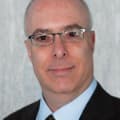
Associate Judge
Associate Judge Josefo has been a Master (now Associate Judge) of the Superior Court of Justice (Ontario) for three years. Before his appointment, for 28 years, Associate Judge Josefo was a civil litigator, practicing primarily but not exclusively in Labour and Employment Law, and Human Rights law as it pertained to employment. From 1999 through to 2018, he was a Vice Chair of the Workplace Safety and Insurance Appeals Tribunal (WSIAT). For nine years ending in 2018, Associate Judge Josefo also served as a member of Council, thus a member of the corporate board, of the National Research Council (NRC), Canada’s leading science and technology agency operating under the aegis of the Ministry of Industry. He was an elected public school board trustee in the 1990s. Associate Judge Josefo readily acknowledges that his most arduous challenge in the past decade was serving as the founding co-Chair of an owners’ group, and then President, of his condominium corporation for five years, followed by remaining on that Board for two more interminable years!

Deputy, TLA Director of Special Programs
Mark Gannage, previously of Torys, McCarthy Tétrault, Stikeman Elliott, and Goodmans, is a Deputy Judge of the Toronto Small Claims Court, Superior Court of Justice (Ontario). He is a litigation counsel and a certified adjudicator who has served on various tribunals. He is the author of Gannage’s Ontario Civil Litigation Commentary and Checklist (Thomson Reuters), three chapters in Bullen & Leake & Jacob's Canadian Precedents of Pleadings (Thomson Reuters), published articles in the Annual Review of Civil Litigation, The Advocates’ Quarterly and other refereed journals, and two federal law reform works. He is a Contributing Editor of the Toronto Law Journal. A former full time and adjunct law professor, Deputy Judge Gannage conceived, designed and taught U of T Law School’s first course in Advance Legal Research, Analysis and Writing. Deputy Judge Gannage was the first (and last!) Head of Legal Research and Analysis of the now deceased Bar Admission Course.
