A practical legal framework for Canadian lawyers working with non-economic immigration pathways.
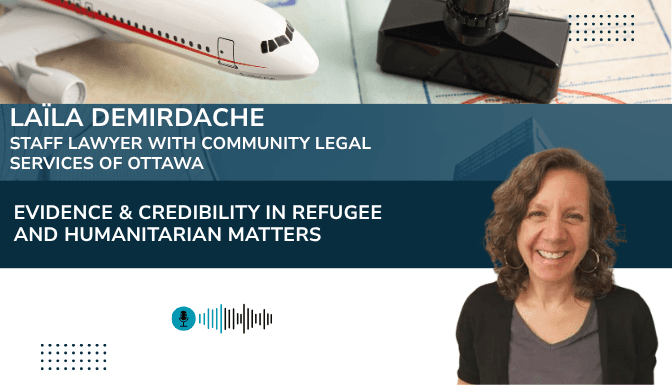
Refugee and humanitarian matters present some of the most complex evidentiary and credibility challenges in Canadian legal practice. Outcomes often turn not only on the applicable legal framework, but on how effectively counsel develops the factual record, anticipates credibility concerns, and navigates procedural fairness—while staying firmly within ethical boundaries.
This practical, skills-focused webinar equips Canadian lawyers with concrete strategies to strengthen case preparation in refugee and non-economic immigration matters. The session explores common weaknesses that undermine claims, best practices for evidence development and client narratives, and advocacy approaches that reduce the risk of refusal or adverse procedural findings. Designed for both immigration practitioners and lawyers who may encounter vulnerable clients in adjacent practice areas, this program focuses on what counsel can control: preparation, process, and professional judgment.
By the end of this course, students will be able to:
Who Should Take This Course:
This course is highly recommended for law students, immigration attorneys, paralegals, human rights advocates, NGO professionals, and government adjudicators/asylum officers who work with refugees, asylum seekers, victims of human trafficking, and other vulnerable migrant populations.

Community Legal Services of Ottawa
Laïla Demirdache has worked as a lawyer with Community Legal Services of Ottawa for over 20 years, providing legal advice and services in the area of immigration and refugee law. She has also been involved in various initiatives to defend the rights of immigrants and refugees, including as part of a team of lawyers before the Supreme Court of Canada, the Federal Court of Appeal, the Federal Court, and the Ontario Court of Appeal for Amnesty International, the Canadian Centre for Victims of Torture, the Barbra Schlifer Commemorative Clinic, and the Canadian Association of Refugee Lawyers (CARL). She also represented the Canadian Council for Refugees (CCR) in a coroner's inquest into the death of a person detained under immigration laws. She has served on several committees, including for the CCR and the CCR. Laïla is often appointed by the Immigration and Refugee Board of Canada (IRB) to act as a designated representative for individuals who, due to their mental health or age, are unable to understand the nature of proceedings before one of the four divisions of the IRB.
