LF logo
by learnformula
search
Log in
search
Courses/Law/Family Law

How to Strategically Litigate Family Law Cases

Master the art of efficient case management, from initial intake to settlement, to save time and resources for your clients.
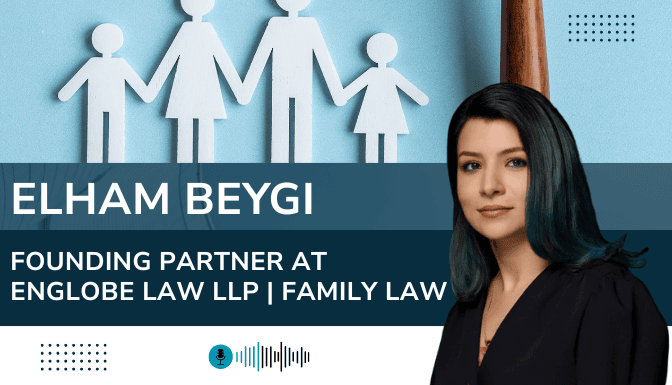
Created byElham Beygi
BeginnerUpdated May 7, 2026
How to Strategically Litigate Family Law Cases

What You'll Learn

check_circleApply strategic case management techniques to identify key issues early in the litigation process.
check_circleAnalyze the necessity and timing of interim motions to ensure they align with the case theory.
check_circleManage disclosure processes efficiently to minimize costs and avoid common procedural pitfalls.
check_circleEvaluate settlement opportunities at various stages of the litigation to achieve client satisfaction.

About This Course

This webinar provides a strategic framework for managing family law litigation more efficiently from the outset of a file through to trial preparation. Drawing on the civil procedure rules, the session walks through why strategic litigation matters, how to structure a case from the very beginning, and how to use the first thirty days of intake to develop a legal and factual theory, secure evidentiary records, and identify the procedural steps the case will require.

The webinar covers the practical mechanics of family law litigation: assessing urgency, framing pleadings so that facts connect clearly to the relief sought, selecting and timing interim motions, and right-sizing each motion to deliver concrete results without exhausting client resources. Significant attention is given to disclosure — identified as the core of family law cases and the source of most disputes around support, equalization, valuation, and tracing — including how to handle incomplete or inconsistent disclosure, when to ask for particulars, how Rules 19 and 20 and questioning fit into the strategy, and when retaining a business evaluator becomes appropriate. Throughout, the session emphasizes integrating settlement discussions at every stage, the strategic use of Rule 17 case conferences as an alternative to motions, and transparent communication with both the client and opposing counsel.

Topics Covered

  1. Why strategic litigation matters — The role of the civil procedure rules, Rule 2's primary objective of dealing with cases justly, and the importance of active case management and identifying issues early.
  2. Structuring the case from the outset — Building a legal theory and a factual theory, mapping evidentiary records, identifying pressure points, and laying out the sequence of procedural steps.
  3. The first thirty days: intake and file security — Securing the file, identifying immediate financial basics, locating evidentiary gaps, anticipating the need for business evaluators, and using opinion letters to manage client expectations.
  4. Assessing urgency and framing the application — Distinguishing high-urgency matters such as child safety and support interruption, deciding when a motion may proceed without notice, and communicating with opposing counsel before commencing the application.
  5. Drafting strong pleadings — Connecting background facts to the relief sought, organizing facts under subtopics such as divorce, support, and equalization, addressing inconsistencies in client recollection, and reflecting issues the parties have already been able to cooperate on.
  6. Temporary support and parenting motions — Centering the best interest of the child, keeping financial statements current within the required timelines (thirty days prior to motion, ten days prior to trial), and documenting allegations such as domestic violence with dates and third-party sources.
  7. Other high-impact interim remedies — Exclusive possession of the matrimonial home, preservation and non-depletion orders, and restraining orders, including when these are better addressed through Rule 17 case conferences than through motions.
  8. Right-sizing motions and timing the relief — Identifying the right-sized motion, recognizing what is too early or too broad, breaking relief into smaller targeted chunks, and weighing the cost consequences of bringing undisputed issues forward together with disputed ones.
  9. Disclosure: the core of family law litigation — Disclosure as it relates to support, equalization, valuation, tracing, property history and sources of funds, credibility, asking for particulars, the use of Forms 13/13.1/13A, Rules 19 and 20, questioning, and the role of business evaluators.
  10. Settlement strategies throughout the case — Integrating settlement discussions at every stage rather than reserving them for the eve of trial, using offers to settle effectively, and signaling next steps to opposing counsel when settlement does not occur.

Your Instructor

Elham Beygi
Elham Beygi

Founding Partner | Family Law, Commercial and Civil Litigation

menu_book1 courses

Elham Beygi is a founding partner at Englobe Law LLP. Her practice focuses on commercial disputes, civil litigation, and all aspects of family law. She regularly represents clients in complex contractual and commercial disputes, as well as high-profile family law matters involving multi-jurisdictional assets and international elements. Elham has appeared before all levels of court in Ontario, including the Ontario Court of Appeal. Before establishing Englobe Law LLP, Elham practiced as a litigation lawyer at Cambridge LLP and Morrison Law, where she represented clients in corporate and commercial matters, real estate, estates, construction disputes, and constitutional litigation. She continues to collaborate with Morrison Law as co-counsel. Elham is a versatile litigator experienced in both high-stakes commercial matters and sensitive family law disputes. She is recognized for her rigorous analytical ability, her multidisciplinary perspective, and her pragmatism in navigating complex issues with clarity and compassion, consistently advancing her clients’ interests before the courts. She has defended her PhD Comprehensive Examination in Legal Philosophy at McMaster University, holds an LL.M. in Canadian Common Law from Osgoode Hall Law School, and a Master’s degree in Interdisciplinary Studies from York University with a focus on law and philosophy. She earned her LL.B. from Shahid Beheshti University, completed her NCA accreditation at Osgoode, and holds a certificate in Maritime Law and Shipping Contracts from Lloyd’s Maritime Academy in London, UK. In addition to her legal practice, Elham has taught courses at McMaster University, York University, and the University of Toronto in areas including law and society, political science, gender studies, legal philosophy, and organizational behavior. She is the author of several academic articles, notably examining corporate and social responsibility in contract law. Elham is a member of the South Asian Bar Association of North America and the Women’s Law Association of Ontario. She is also the co-founder of a travelling platform for Farsi-speaking scholars in the humanities and social sciences. She is fluent in Farsi and has basic proficiency in French.

Credit Information

What Students Are Saying

0.0
Student's Choice
0 reviews

Frequently Asked Questions

We are a registered provider with 327+ associations and regulatory bodies worldwide. We operate across 29 global markets including Canada, the US, Australia, and the UK. Every course page clearly displays its specific accreditations. Upon completion, you receive a professional certificate that can be validated online. Our certificates include all necessary accreditation details, credit hours, and completion dates, and are formatted specifically to meet the submission requirements of most global regulatory bodies.