Master psychiatric compensability, evaluate complex medical evidence, and mitigate high-stakes liability in modern workers’ compensation claims.
Psychological injury claims have become one of the most complex and rapidly evolving areas of workplace law and workers’ compensation. As awareness of mental health issues continues to grow, employers, insurers, legal practitioners, and workers’ compensation boards are increasingly required to assess claims involving workplace stress, harassment, traumatic events, interpersonal conflict, and psychological disorders arising from employment. These claims often present unique challenges that differ significantly from traditional physical injury cases.
Determining whether a psychological injury is compensable frequently requires careful consideration of causation, medical evidence, workplace circumstances, and statutory eligibility requirements. Questions often arise regarding the extent to which workplace events contributed to an injury, how pre-existing conditions should be considered, and what evidence is required to establish a compensable claim. At the same time, employers must navigate growing legal and reputational risks associated with workplace mental health issues while balancing operational and management responsibilities.
This session examines the legal principles and practical challenges involved in psychological injury claims through the lens of the Alberta workers’ compensation framework. Participants will explore how psychological claims are assessed, the evidentiary issues that commonly arise, and the legal developments shaping this evolving area of practice. The course provides practical guidance for understanding compensability, managing risk, and navigating the intersection of workplace conduct, mental health, and compensation law.
Key Topics Discussed:

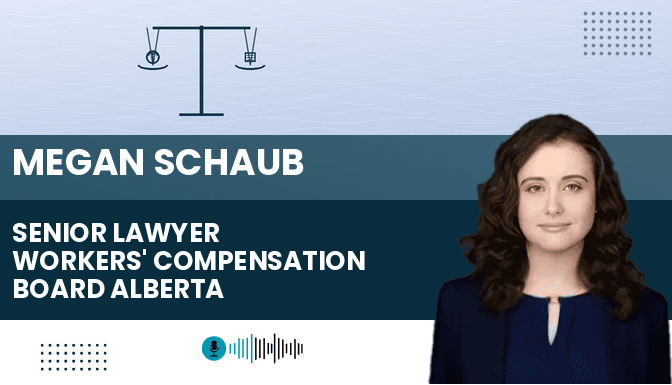
Senior Lawyer | Workers’ Compensation Board Alberta
Megan Schaub is a senior lawyer at the Workers’ Compensation Board Alberta. Megan is an experienced litigator and has represented clients before all levels of court in Alberta. She also frequently represents the Workers’ Compensation Board Alberta before administrative tribunals, including the Appeals Commission for Alberta Workers’ Compensation. She holds a BA with distinction, and a JD with distinction, both from the University of Alberta, and has presented on matters pertaining to workers’ compensation for the Canadian Bar Association and the Alberta Civil Trial Lawyers Association.
