Discover how flawed forensics put innocent Canadians behind bars and explore the relentless legal battles to expose junk science, overturn wrongful convictions, and seek justice.
Wrongful convictions represent one of the most serious failures in the criminal justice system, and forensic science often sits at the centre of both conviction and correction. “Wrongful Convictions, Forensic Science, and The Canadian Courtroom” examines how forensic evidence is generated, challenged, and interpreted within Canadian criminal proceedings—and how errors in forensic practice have contributed to miscarriages of justice.
This program explores key Canadian wrongful conviction inquiries and the forensic failures they revealed, alongside a critical analysis of the admissibility and reliability of different forensic disciplines. Participants will examine the evolving jurisprudence governing expert evidence, as well as the growing scrutiny applied to contested or discredited forensic methods.
The session also addresses emerging forensic technologies and their evidentiary implications, while providing defence-focused strategies for managing disclosure, challenging expert testimony, and engaging in post-conviction review. Designed for practitioners, it bridges scientific complexity with courtroom strategy to improve the integrity and reliability of forensic evidence in litigation.
Key Topics Discussed:

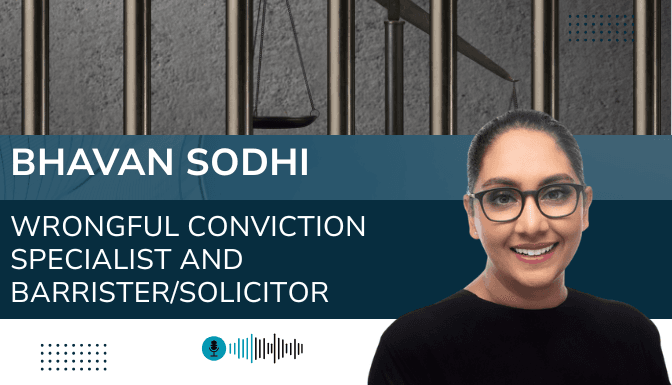
Wrongful Conviction Specialist and Barrister/Solicitor
Bhavan is a nonprofit leader dedicated to the pursuit of justice and human rights. With a background spanning executive leadership, legal advocacy, and program development, she specializes in navigating the complexities of the criminal legal system to drive systemic change. Throughout her career, Bhavan has held senior leadership roles, most recently serving as Chief Program Officer at the Innocence Project in New York City. Her experience includes serving as Legal Director at Innocence Canada and Executive Director of the Innocence Project in Toronto. During her tenure, Bhavan served as counsel on multiple landmark wrongful conviction cases, including the historic exonerations of Brian Anderson and Allan Woodhouse, whose convictions were overturned after 50 years, as well as Robert Mailman and Walter Gillespie, leading to the quashing of decades-old murder convictions. Bhavan is deeply committed to mentorship and policy work, which is reflected in her contributions as the Co-Founder of the Wrongful Conviction Externship at the University of Toronto Faculty of Law, a Board Member of Innocence Canada (including the Case Review Committee), and a Board Member of the Elizabeth Fry Society. She is passionate about building sustainable nonprofit programs that bridge the gap between legal theory and human rights, ensuring the legal system works for everyone—not just the few.
