
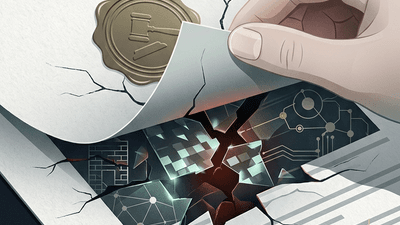



Trust is the undisputed bedrock of the legal profession. Clients trust lawyers to navigate complex systems on their behalf, and the courts trust lawyers to act as honest officers of the justice system. When a practitioner fractures that trust—not merely through administrative negligence, but through active, calculated forgery—the reverberations are felt across the entire legal landscape. A recent disciplinary case in British Columbia has brought this uncomfortable reality to the forefront, resulting in a staggering decade-long practice ban for a lawyer who admitted to fabricating documents and falsifying court stamps.
For Canadian law professionals, this extreme ethical breach is more than a sensational headline or a cautionary tale. It is an urgent mandate to re-evaluate internal governance, document verification protocols, and the systemic pressures that can drive practitioners to cross the Rubicon of professional misconduct. As the legal industry increasingly relies on digital documentation, the line between authentic records and sophisticated forgeries has never been more critical to defend.
The Anatomy of a Breach: Fabrication and Falsification
According to the Law Society of British Columbia (LSBC), the lawyer in question engaged in a prolonged pattern of deception. The misconduct involved faking letters from government agencies and deliberately misleading clients about the status of their legal matters. Most egregiously, the lawyer resorted to falsifying official court stamps on documents—a direct assault on the integrity of the judicial process.
The Mechanics of the Deception
While the specifics of the fabrication varied, the underlying methodology highlights a critical vulnerability in how legal documents are processed and communicated to clients. Often, clients rely entirely on their counsel to provide updates and forward official correspondence. When a lawyer becomes a bottleneck for information, they also become a single point of failure for truth. By fabricating government letters and court stamps, the lawyer created an alternate reality for their clients, likely in an attempt to cover up missed deadlines, strategic failures, or administrative paralysis.
"The fabrication of court documents strikes at the very heart of the administration of justice. It is not merely a deception of the client, but a subversion of the institutional authority that courts rely upon to function and that the public relies upon for truth."
This type of misconduct rarely occurs in a vacuum. It is frequently the culmination of the "snowball effect"—where a minor mistake or missed limitation period is concealed by a lie, which then requires forged documentation to sustain, eventually spiraling into massive ethical violations.
Regulatory Reckoning: The Decade-Long Ban
The LSBC's decision to accept a decade-long ban from practicing law in Canada is a severe regulatory response, though it opens a dialogue about the mechanisms of professional discipline. Often, when faced with overwhelming evidence of active fraud or forgery, practitioners may seek to resign in the face of discipline or agree to a lengthy consent agreement rather than undergo a protracted public hearing.
A 10-year ban effectively ends a legal career, but it also serves a dual purpose for the regulator: it removes an immediate threat to the public and sets a stark deterrent precedent. To understand where this fits within the broader landscape of legal discipline, consider the spectrum of regulatory responses:
| Type of Misconduct | Typical Regulatory Response | Impact on Firm and Clients |
|---|---|---|
| Administrative Negligence (e.g., chronic missed deadlines, poor communication) | Fines, mandatory remediation, practice supervision, short-term suspensions. | Financial liability (malpractice claims), reputational damage, but generally recoverable trust. |
| Trust Account Irregularities (e.g., commingling funds, minor shortfalls) | Lengthy suspensions, mandatory forensic audits, strict practice restrictions. | Severe financial penalties, loss of client funds, high risk of firm dissolution. |
| Active Forgery & Fraud (e.g., fake court stamps, fabricated orders) | Disbarment, long-term bans (10+ years), potential criminal investigations. | Catastrophic reputational damage, invalidation of legal proceedings, total loss of public confidence. |
While a 10-year ban is definitive, it raises a pertinent question for the profession: How did the deception go unnoticed long enough to require such drastic intervention? The answer often lies in the governance structures of the law firms themselves.
Systemic Vulnerabilities and Law Firm Governance
The discovery of falsified court stamps should prompt every managing partner and compliance officer in Canada to ask a difficult question: Could this happen here?
In many firms, especially smaller partnerships or solo practices sharing resources, lawyers operate in silos. A practitioner may handle a file from intake to resolution with minimal oversight. While this autonomy is a hallmark of the profession, it creates fertile ground for misconduct if a lawyer becomes overwhelmed or compromised.
To mitigate the risk of such catastrophic ethical breaches, law firms must proactively engineer their environments to prioritize transparency. This requires actionable, structural changes to firm governance:
- Implement Dual-Verification for Critical Filings: Ensure that final court orders, stamped documents, and critical government correspondence are uploaded directly from court portals (like Justice Services Online in Ontario or Court Services Online in B.C.) into a centralized, firm-wide document management system, rather than residing solely on a single lawyer's local drive.
- Conduct Random File Audits: Much like financial audits for trust accounts, firms should institute random, peer-reviewed file audits. Having a colleague review a file's progression not only catches strategic errors early but acts as a powerful deterrent against concealing mistakes.
- Normalize Error Reporting: The psychological root of much forgery in legal practice is the fear of admitting a mistake. Firms must foster a culture where missing a deadline or making a strategic error is treated as a critical, but manageable, professional challenge to be solved collectively, rather than a terminal failure to be hidden.
- Centralize Client Communications: Utilizing secure client portals where documents are automatically synced from verified court databases can remove the temptation—and the ability—for a lawyer to manually alter a document before sending it to a client.
The Role of Technology: From Enabler to Guardian
As the legal system digitizes, technology plays a paradoxical role. On one hand, basic software makes it easier than ever to copy, paste, and manipulate digital court stamps or government letterheads. A PDF editor is all it takes to create a convincing forgery that can fool a layperson client.
On the other hand, technology is the ultimate guardian of authenticity. Canadian courts are increasingly adopting robust e-filing systems that generate verifiable digital footprints. Digital signatures, blockchain-backed document verification, and cryptographic hashing are moving from the fringes of legal tech into mainstream application. In the near future, a "court stamp" will not be a visual seal that can be Photoshopped, but a cryptographic certificate that can be instantly verified against a court's public ledger.
Until these systems are universally adopted, the burden of verification falls on the profession. Lawyers receiving documents from opposing counsel, and firms overseeing their own associates, must maintain a healthy skepticism. If a document's provenance seems questionable, verifying it directly with the issuing court or agency is not a breach of professional courtesy; it is a fundamental duty to the administration of justice.
Conclusion: Rebuilding the Bedrock of Trust
The B.C. lawyer's admission to fabricating documents and falsifying court stamps is a dark chapter, but it provides a vital stress test for the Canadian legal profession. A decade-long ban removes the immediate offender, but it does not cure the systemic vulnerabilities that allowed the deception to occur.
As we look forward, the integrity of the profession will not be maintained solely by the threat of severe regulatory punishment. It will be safeguarded by law firms that build resilient, transparent governance structures, by courts that adopt unforgeable digital verification systems, and by a professional culture that demands truth above all else. Trust may be the bedrock of the legal profession, but it is up to every practitioner to ensure that foundation remains uncrackable.